

The Honde Valley’s dramatic escarpments, forested ridges, and open tea-estate clearings make it one of the most rewarding raptor-watching locations in southern Africa. Here, cliffs generate the updrafts favored by soaring eagles, while deep river corridors shelter specialised forest hunters. Visitors exploring the valley’s viewpoints and forest edges are often struck by how quickly the sky changes—one moment calm and unbroken, the next alive with the silhouettes of hunting eagles or the fast-darting shape of a falcon. The region’s blend of habitats supports both resident and migratory birds of prey, offering a unique concentration of species that adds a powerful sense of wilderness to the valley’s already dramatic landscape.
African Fish Eagle — Haliaeetus vocifer
Recognised by its iconic call, the African Fish Eagle is a regular sight along larger rivers and dams. It perches prominently near water, using height and patience to spot fish near the surface.
Status: Not Endangered
Crowned Eagle — Stephanoaetus coronatus
One of Africa’s most formidable forest eagles, the Crowned Eagle uses the Honde Valley’s tall indigenous trees as both nesting and hunting structures. Its broad wings and long tail allow agile movement through dense canopy.
Status: Near Threatened
Steppe Eagle — Aquila nipalensis
A migratory raptor from Eurasia, the Steppe Eagle visits during the southern summer. It often soars high above open areas, riding thermals as it scans for carrion.
Status: Endangered
Tawny Eagle — Aquila rapax
Seen gliding over open farmland sections of the valley, the Tawny Eagle is adaptable and opportunistic. Its broad habitat tolerance makes it a frequent but special sight.
Status: Vulnerable
Booted Eagle — Hieraaetus pennatus
A migratory species with light and dark morphs, the Booted Eagle is elegant and compact. It often patrols ridgelines, occasionally diving swiftly toward prey.
Status: Least Concern
Lesser Spotted Eagle — Clanga pomarina
Another Eurasian migrant, the Lesser Spotted Eagle relies on the valley’s mosaic of woodland and open country. It is generally unobtrusive, soaring quietly on warm thermals.
Status: Vulnerable
Wahlberg’s Eagle — Hieraaetus wahlbergi
A common summer breeder, Wahlberg’s Eagle is known for its small size and distinctive pointed wings. It often nests in tall trees bordering the tea estates.
Status: Least Concern
Brown Snake Eagle — Circaetus cinereus
Preferring open habitats, this eagle is known for its upright posture and snake-based diet. Its broad, rounded wings make it easy to identify in soaring flight.
Status: Near Threatened
Black-chested Snake Eagle — Circaetus pectoralis
Wearing a striking dark “breastplate,” this species is often seen hovering before dropping onto reptiles in clearings or rocky slopes.
Status: Least Concern
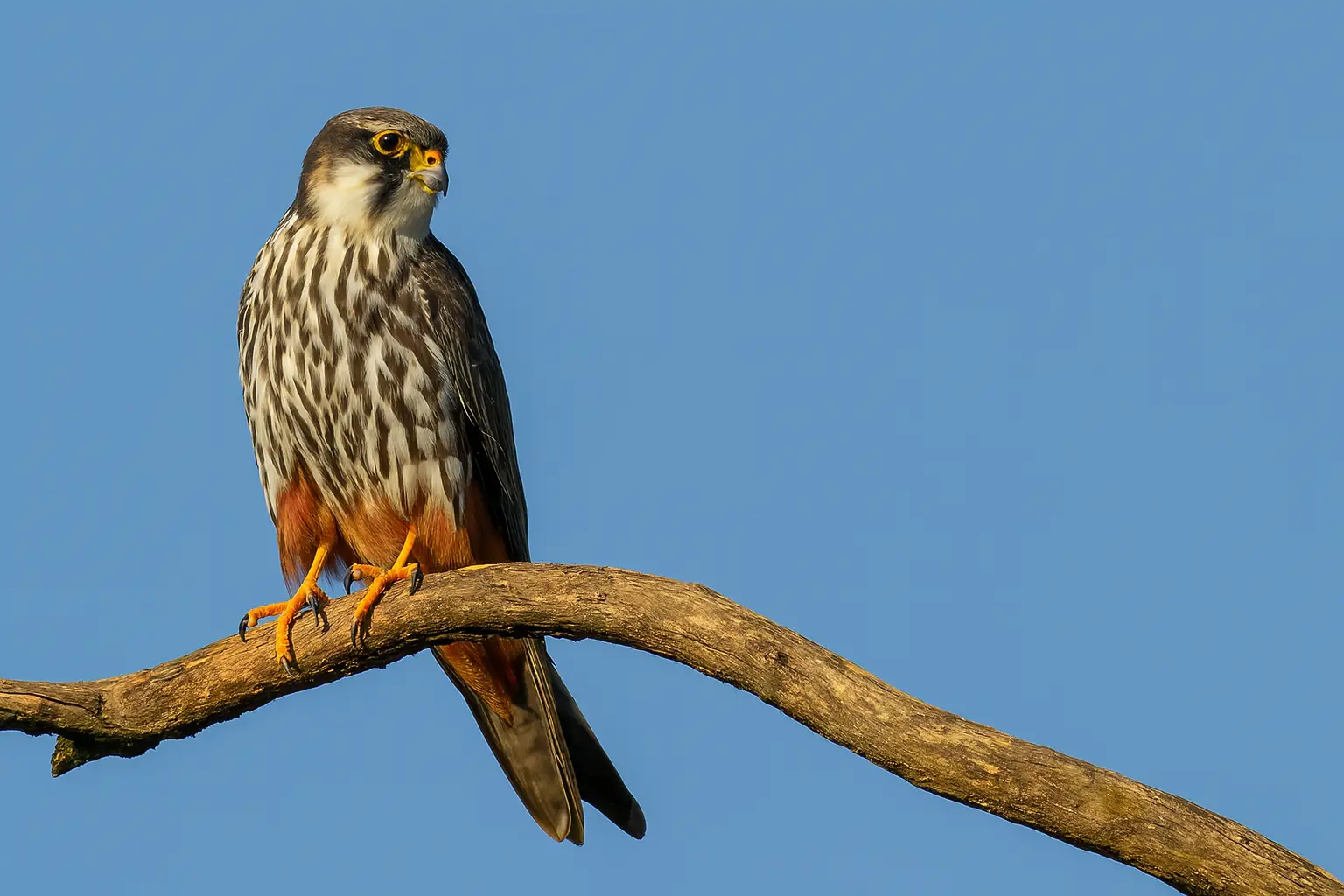
African Hobby Falcon — Falco cuvierii
Small, fast, and sleek, the African Hobby hunts insects and small birds at high speed. It is most active during early morning and dusk.
Status: Least Concern
Eurasian Hobby — Falco subbuteo
A migrant falcon that arrives during the warmer months, the Eurasian Hobby is equally agile and often flies alongside swifts and swallows, snatching prey mid-air.
Status: Least Concern
Taita Falcon — Falco fasciinucha
One of the rarer falcons of the region, the Taita Falcon prefers rocky cliffs and escarpments. Its powerful, direct flight and rapid dives make it exceptional to observe.
Status: Vulnerable
Lizard Buzzard — Kaupifalco monogrammicus
Compact and easily overlooked, the Lizard Buzzard is common in woodland margins. Its distinctive black-and-white throat stripe helps with identification.
Status: Least Concern
European Honey Buzzard — Pernis apivorus
A migrant specialist feeder, the Honey Buzzard moves through the valley while foraging for wasp larvae and insects. It has a slender, long-necked appearance.
Status: Least Concern
The diversity of raptors in the Honde Valley enhances the sense of scale and wildness in this mountainous region. Whether you are scanning the skyline from a viewpoint or walking beneath the forest canopy, the presence of these birds of prey is a constant reminder of the valley’s ecological richness. Observing them rewards patience and curiosity, making raptor-watching one of the valley’s most memorable wildlife experiences.