

Hidden Voices of the Honde Valley: Forest Specialists of the Eastern Highlands
The deep forests of the Honde Valley—humid, shaded, and rich with ancient trees—provide habitat for a unique community of elusive bird species. These birds often remain hidden in the understory or mid-canopy, relying on camouflage and quiet movement rather than open display. For visitors, encountering forest specialists offers a different style of birdwatching: slower, more immersive, guided by subtle calls, quick movements in foliage, and the sense that something rare may appear at any moment. The valley’s forests preserve fragments of Eastern Highlands biodiversity, making them essential for conservation and exploration alike.
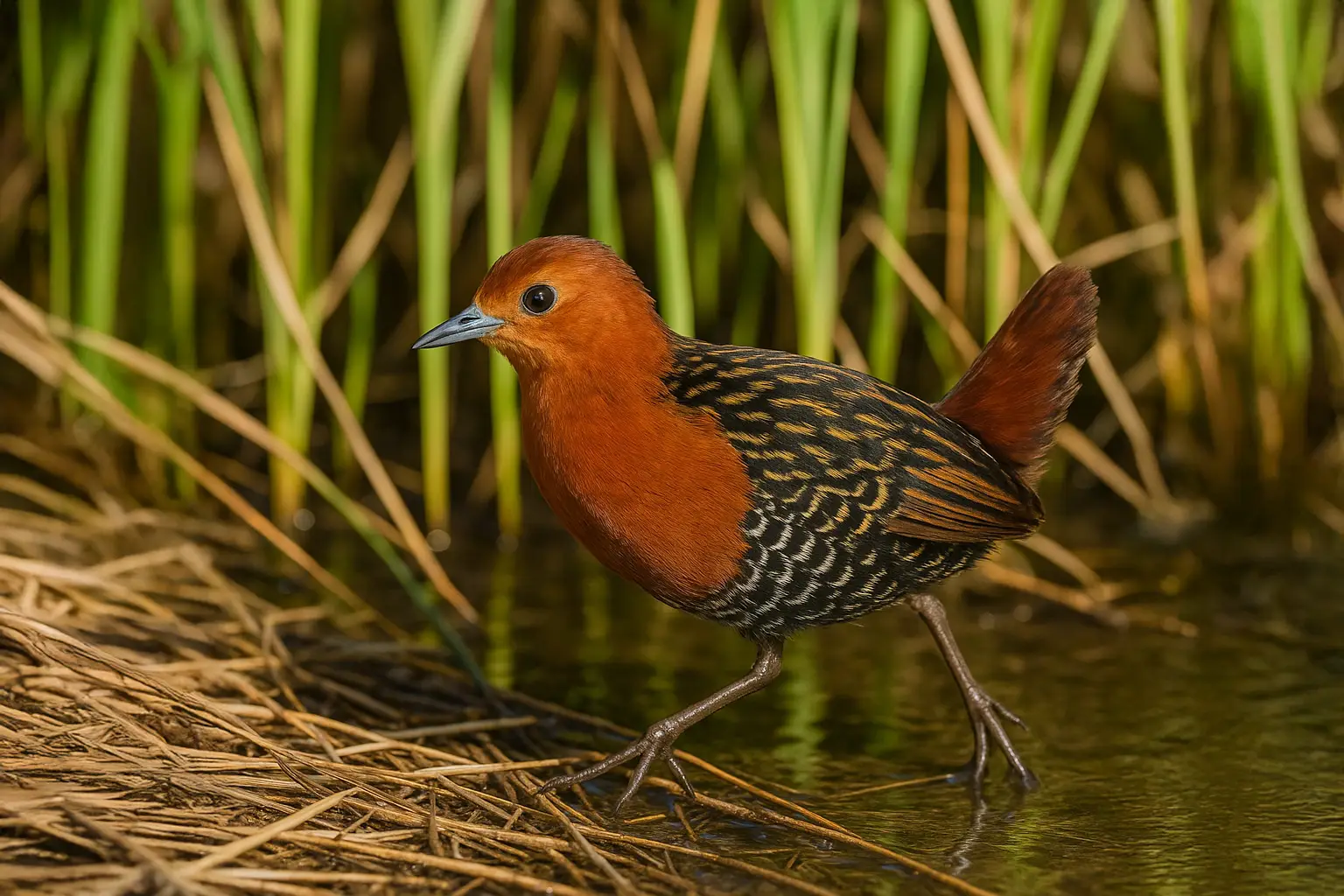
Red-chested Flufftail — Sarothrura rufa
A small, secretive wet-forest bird, the Red-chested Flufftail is heard more often than seen. It prefers damp grasslands and marshy thickets.
Status: Least Concern
Buff-spotted Flufftail — Sarothrura elegans
Known for its soft, rhythmic calls at dawn and dusk, this species inhabits dense forest floors and is extremely shy.
Status: Least Concern
Anchieta’s Tchagra — Tchagra anchietae
A skulker of thickets and tangled woodland edges, Anchieta’s Tchagra is known for its distinctive descending whistle.
Status: Least Concern
Square-tailed Drongo — Dicrurus ludwigii
Found in forest interiors, this drongo is bold and agile, often following mixed flocks and catching insects on the wing.
Status: Least Concern
Marsh Tchagra — Tchagra minuta
Preferring wet grasslands and reedbeds, the Marsh Tchagra is a soft-coloured bird with deliberate movements and a melodious call.
Status: Least Concern
African Finfoot — Podica senegalensis
A rare and highly sought-after species, the African Finfoot inhabits shaded rivers and streams. Its secretive behaviour makes sightings especially rewarding.
Status: Least Concern
Palm-nut Vulture — Gypohierax angolensis
Unusual among raptors, this vulture frequents riverine forests and palm-rich landscapes. It feeds partly on fruit and is often seen near water.
Status: Least Concern
These secretive species reveal the quiet magic of the Honde Valley’s forested world—one where patient observation unlocks encounters that are subtle, memorable, and often deeply moving. For travellers seeking a deeper connection to nature, exploring the valley’s shaded paths and river corridors offers a rare opportunity to engage with some of southern Africa’s most fascinating forest birds.