

Exploring the Forest Crown of Zimbabwe’s Eastern Highlands
The Honde Valley, draped along the steep eastern slopes of Zimbabwe’s Eastern Highlands, is renowned for its mist-bound forest corridors, lush river systems, and humid pockets of evergreen vegetation. While many visitors arrive in search of sweeping scenery or cool mountain air, the valley’s most captivating secrets often sit above eye level — woven through the branches, fruits, and vines of its mature forest canopy. This elevated world is home to a remarkable collection of frugivorous and canopy-dwelling birds, each playing a vital ecological role while adding to the valley’s unique sense of place.
Unlike the endemics of the deeper forest understorey, canopy species are more dynamic and vocal. Their movements animate the treetops: hornbills crashing through fruiting branches, greenbuls chattering nervously from the mid-storey, flycatchers darting between shafts of sunlight. These birds not only enrich local biodiversity but also shape the forest itself, transporting seeds, regulating insects, and sustaining ecological balance.
For travelers exploring the Honde Valley, this group offers an exciting encounter with the region’s upper-layer ecosystems. Their presence highlights the valley’s strong conservation value, as many species rely on stable woodland, mature riverine growth, and undisturbed canopy cover. The following profiles introduce each species in this group, offering an understanding of their characteristics and their place within the larger forest landscape.
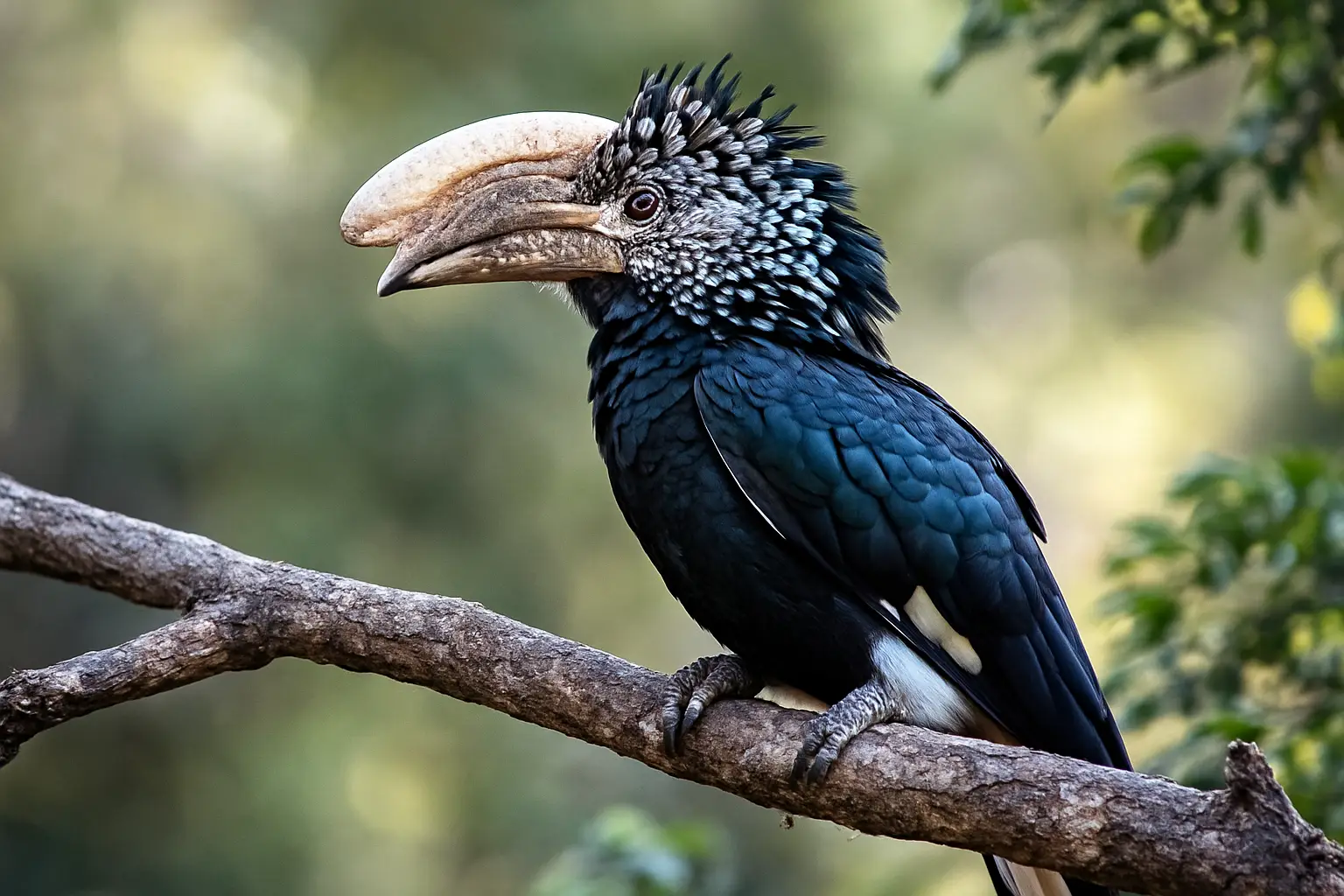
Silvery-cheeked Hornbill — Bycanistes brevis
A large, powerful frugivore, this hornbill travels widely across the valley in search of fruiting trees. Its loud calls and impressive casque make it easy to identify.
Status: Least Concern
Trumpeter Hornbill — Bycanistes bucinator
Often moving in small flocks, the Trumpeter Hornbill is both vocal and striking, with its dark plumage and curved bill. It is commonly seen along forest edges.
Status: Least Concern
Crowned Hornbill — Lophoceros alboterminatus
The most slender of the valley’s hornbill species, the Crowned Hornbill frequents woodland margins and riverine trees. Its reddish bill contrasts with its brown plumage.
Status: Least Concern
Stripe-cheeked Greenbul (Bulbul)
Scientific Name: Arizelocichla milanjensis
A classic Eastern Highlands forest bird, the Stripe-cheeked Greenbul inhabits the mid-storey of moist evergreen woodland. It is olive-brown overall with distinctive pale streaking on the cheeks. Greenbuls are known for their lively chatter, moving in small flocks and often leading mixed-species bird parties. This species is classified as Least Concern, though it remains dependent on mature forest systems. For visitors, it is often heard long before it is seen, adding a constant musical layer to forest walks.
Barratt’s Warbler
Scientific Name: Bradypterus barratti
Though called a warbler, Barratt’s Warbler spends its time in dense thickets and tangled lower canopy edges. The species is dark, subtle in appearance, and far more often identified by its persistent call. It prefers damp, shaded woodland margins and steep ravines — habitats that abound in the Honde Valley. It is considered Least Concern, with stable populations across the Eastern Highlands.
White-tailed Crested Flycatcher
Scientific Name: Elminia albonotata
This elegant flycatcher is a standout canopy bird, recognised by its soft grey plumage, black crest, and distinctive white tail tips. It moves energetically through the treetops, often sallying out to catch insects in midair. The species thrives in montane forest and forest edges, habitats well represented in the valley. Classified as Least Concern, it responds favourably to intact woodland and can often be found accompanying other canopy feeders.
Yellow-throated Woodland-warbler
Scientific Name: Phylloscopus ruficapilla
A delicate and active warbler, this species flits through leaves in search of insects and spiders. Its muted olive-green plumage contrasts with a glowing yellow throat, making it one of the more visually attractive canopy warblers. The species is listed as Least Concern, though it is sensitive to excessive canopy disturbance. Honde Valley’s mature forest strips provide excellent habitat, making sightings fairly frequent for patient visitors.
Red-faced Crimsonwing
Scientific Name: Cryptospiza reichenovii
With its rich reds and greens, the Red-faced Crimsonwing adds vibrant colour to the valley’s dimly lit forest interior. It tends to stay low within thick foliage or along vine tangles but ventures into the mid-storey to forage for seeds and fruit. Classified as Least Concern, the species remains tied to dense forest, making the Honde Valley an ideal location for sightings. Its secretive nature makes it especially prized among birdwatchers.
Livingstone’s Turaco (Knysna Turaco)
Scientific Name: Tauraco livingstonii
A flagship frugivore of southern African forests, the Livingstone’s Turaco is a spectacular bird with deep green plumage, crimson wing flashes, and a regal crest. Its distinctive call echoes across forest slopes, instantly evoking the atmosphere of Eastern Highlands woodland. Turacos feed heavily on fruit, dispersing seeds throughout the forest — a crucial ecological service. The species is listed as Least Concern, though it depends on stable, mature canopy zones. In Honde Valley, turacos are common companions along forested riverbanks and humid gullies.
Lesser Seedcracker
Scientific Name: Pyrenestes minor
A compact forest finch with a heavy bill adapted for cracking hard seeds, the Lesser Seedcracker is a speciality bird of dense Eastern Highlands vegetation. Males show rich maroon colouring, while females are more subdued. The species is considered Least Concern, although it remains dependent on undisturbed patches of forest and woodland thicket. Its presence is often detected at forest edges or near fruiting shrubs.
Square-tailed Drongo
Scientific Name: Dicrurus ludwigii
This sleek black bird with a square-tipped tail occupies woodland, forest edges, and riverine canopy zones. Known for its intelligence and sharp calls, the Square-tailed Drongo is often seen perched openly, ready to sally out for insects. It is classified as Least Concern and adapts relatively well to habitat variation, provided mature trees remain intact. Its assertive behaviour frequently makes it one of the more conspicuous birds in the canopy.
Experiencing the Canopy in the Honde Valley
Exploring the canopy birds of the Honde Valley offers a refreshing contrast to the more elusive forest-floor specialists. Early morning walks along forest trails, guided visits to woodland reserves, and slow exploration near fruiting trees reward travelers with a lively blend of calls, colour, and movement. This group highlights not only the ecological richness of the valley but also the importance of maintaining forest connectivity across slopes and watersheds.
By appreciating the canopy and its frugivores, visitors gain a fuller picture of the valley’s ecological story — a thriving world where trees, fruit, insects, and birds are tightly interlinked. As tourism grows, responsible travel and forest conservation remain essential to ensuring that these species continue to shape the character of the Honde Valley for generations to come.
These large frugivores are a defining part of the valley’s forest identity. Their movements help maintain ecological continuity by carrying seeds far from the parent trees. For visitors, encountering these birds—whether in a flash of crimson wings or the deep call of a hornbill—is a memorable highlight that reflects the valley’s rich canopy biodiversity.