

Exploring the Highlands’ Most Distinctive and Localised Birdlife
Nestled along the eastern edge of Zimbabwe, the Honde Valley remains one of the most ecologically rich and visually striking pockets of the Eastern Highlands. Slopes wrapped in montane forest, mist-draped ridges, and cool upland microclimates combine to create an environment unlike any other region in the country. For bird enthusiasts, the valley is an essential waypoint — a landscape where several of Africa’s rarest and most localised species occur. These are birds tied so closely to this unique highland band that encountering them beyond these forests is either rare or impossible.
This article introduces the Eastern Highlands Endemics & Near-Endemics, a small but significant group whose limited ranges make them especially important in conservation-minded tourism. For travellers, these species offer more than simple observation; they provide the chance to explore one of Zimbabwe’s last strongholds of intact montane habitat. From the damp forest understorey to the moss-coated canopy, the valley reveals its character through these birds, each adapted perfectly to its ecological niche.
What follows is a guide to the notable species in this category — their identities, traits, and conservation status — helping visitors understand not only what to look for, but why these birds matter to the greater story of the Honde Valley.
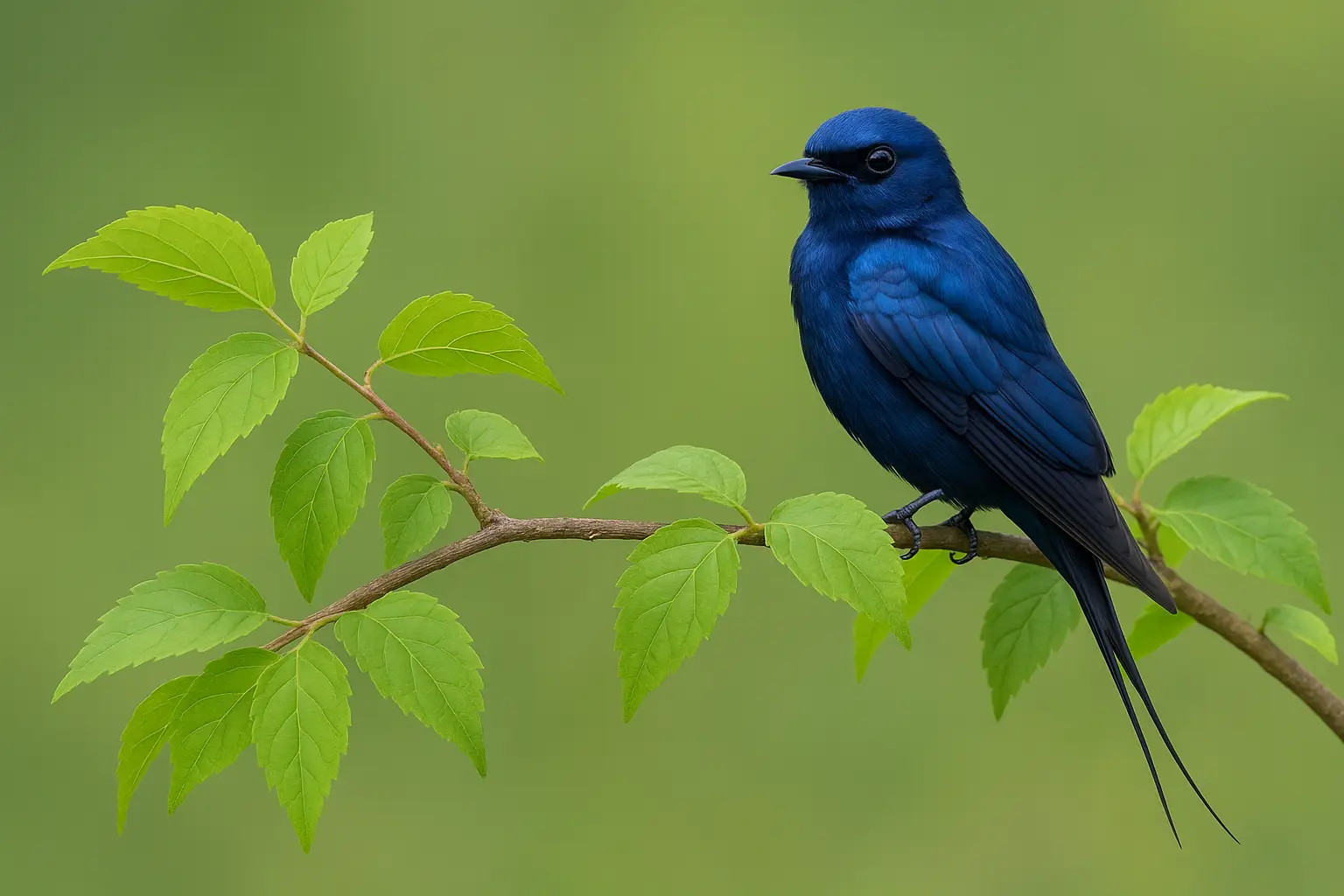
Blue Swallow (Hirundo atrocaerulea)
A striking cobalt-blue aerial insectivore, the Blue Swallow is one of the Eastern Highlands’ most iconic species. It favours montane grasslands dotted with termite mounds, where it hunts gracefully over open space. Classified as Endangered, it faces extensive habitat loss across southern Africa. Honde Valley offers an increasingly rare refuge due to its high-altitude grasslands and damp, misty climate.
Swynnerton’s Robin (Swynnertonia swynnertoni)
A shy forest understorey specialist, Swynnerton’s Robin is a true Eastern Highlands endemic, occurring only in fragmented montane forests of Zimbabwe, Mozambique, and Tanzania. Its russet crown, greyish underparts, and inquisitive posture make it a prized sighting. It is listed as Near Threatened, largely due to forest degradation and restricted range.
Plain-backed Sunbird (Anthreptes reichenowi)
This sunbird is subtle in plumage compared to its more colourful relatives, but its presence signals intact mid-elevation forest. The species feeds on nectar, insects, and spiders, moving swiftly among flowering shrubs. It is considered Least Concern, though highly dependent on stable woodland cover. Honde Valley’s mixed forest edges support healthy populations.
Chirinda Apalis (Apalis chirindensis)
Confined to the Eastern Highlands in Zimbabwe and central Mozambique, the Chirinda Apalis is a slender, active canopy and mid-storey warbler. It occurs in evergreen forest, often giving away its presence through soft, repetitive contact notes. It is classified as Near Threatened due to its limited and fragmented habitat.
Roberts’s Warbler (Oreophilais robertsi)
Another highland specialist, Roberts’s Warbler inhabits thickets, forest edges, and dense understory vegetation. It is olive-grey with subtle streaking, and its persistent tail flicking is often seen before the bird itself. The species is Least Concern, although range-restricted and sensitive to habitat disturbance.
Orange Ground Thrush (Geokichla gurneyi)
This thrush is a highlight for visitors exploring shady, damp forest floors. With its rich orange underparts and dark mantle, the Orange Ground Thrush is instantly recognisable. It favours leaf-littered gullies where it forages quietly. The species is Least Concern, though reliant on mature forest structure.
White-starred Robin (Pogonocichla stellata)
Easily noted by the small white crescent on its face, the White-starred Robin is a secretive but charismatic forest resident. It prefers dense undergrowth and responds well to soft whistled calls. It is considered Least Concern, but its habitat is increasingly localised to protected areas like those surrounding the Honde Valley.
Red-capped Robin-chat (Cossypha natalensis)
Widespread but still strongly associated with moist forests and riverine thickets, the Red-capped Robin-chat features a vivid orange crown and melodious voice. It adapts well to secondary growth and is listed as Least Concern. While not endemic, it is an important part of the valley’s forest bird community.
Experiencing Endemics in the Honde Valley
Travelers visiting the Honde Valley encounter more than just a checklist of rare birds. The region’s altitude shifts, seasonal mists, and deeply carved valleys create an atmosphere ideal for immersive nature tourism. Guided walks through forest reserves, dawn excursions along ridge paths, and visits to conservation sites such as forest patches on private farms enable opportunities to see these species responsibly.
Conservation awareness remains a crucial component of travel here. Many of these birds exist within restricted highland bands, making habitat protection essential. Tourism plays a useful role in reinforcing the value of the region’s natural assets. Whether visitors are experienced birdwatchers or curious travelers seeking new experiences, the endemics of the Eastern Highlands provide a textured, memorable introduction to the valley’s ecological identity.